Mattress Care
Caring for a Natural Latex Mattress: A Simple Maintenance Guide
Natural latex is resilient, but resilience is not a cleaning plan. A few steady habits—protecting the surface, responding carefully to spills, and keeping moisture in check—can help preserve a latex mattress without exposing it to unnecessary wear.
A natural latex mattress asks for less drama than many household surfaces. It does not need a monthly deep clean, a strong fragrance to signal freshness, or a spray bottle filled with improvised solutions. It does need thoughtful care. Latex mattresses are made with materials and constructions that vary by manufacturer, and the safest routine begins with the care label or instructions supplied with the specific bed.
That distinction matters because a mattress is not a washable blanket. The cover may be removable on some models, but the latex core generally should not be put in a washing machine or saturated with water. Even when the surface looks sturdy, moisture can linger inside layers and become difficult to remove. Gentle prevention is usually easier—and safer—than trying to clean a problem after it has spread.
This guide covers practical natural latex mattress care: everyday protection, airing, handling a small spill, managing moisture, and avoiding common cleaning mistakes. If the mattress has a removable cover, special zoning, several latex layers, or a particular warranty, follow the manufacturer’s directions before unzipping, moving, or treating any part of it.
Start with the mattress instructions
Before using a cleaner or taking the mattress apart, look for its care tag, product manual, or manufacturer’s online guidance. “Natural latex” describes a material category, not one universal construction. A mattress may combine latex with a textile cover, wool, cotton, foam, adhesives, or other layers. Those components may have different care requirements.
Check whether the cover is removable and whether it is washable. A zipper does not automatically mean the cover belongs in a washing machine; some covers are designed to remain in place or require spot treatment only. Likewise, an instruction to rotate a mattress does not mean that every model should be flipped. Many mattresses have a designated sleeping surface.
- Keep the care label and warranty information accessible.
- Confirm whether the cover can be removed, washed, or only spot-cleaned.
- Check whether the mattress should be rotated and how often.
- Ask the manufacturer before moving internal layers or treating a substantial stain.
When directions are unclear, contact the manufacturer before experimenting. A cautious pause is preferable to applying a product that could discolor fabric, weaken a layer, or affect warranty coverage.
Protect first; clean less later
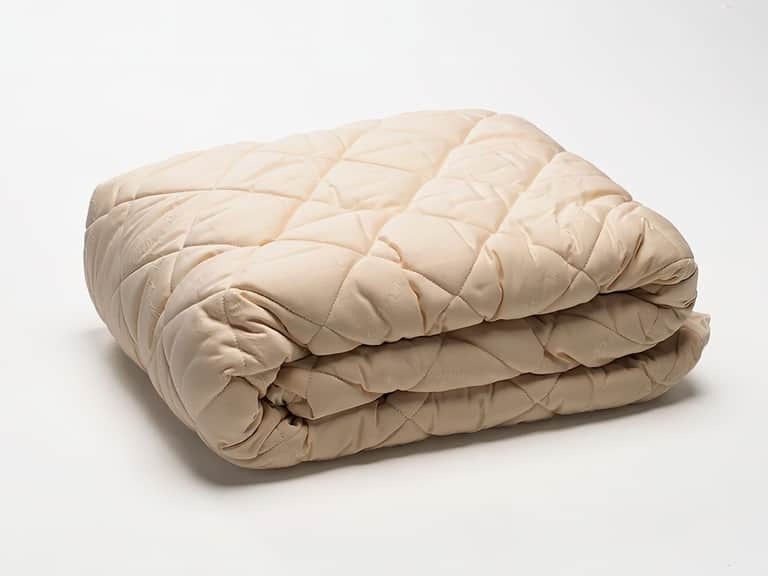
The simplest mattress-cleaning strategy is to keep routine dirt and moisture from reaching the mattress in the first place. A well-fitting protector can help shield the surface from sweat, dust, skin oils, and accidental spills. Choose one that suits the bed’s depth and construction, and make sure it does not bunch or pull against the cover.
Protection should match the household. A waterproof layer can be useful where spills, nighttime accidents, or other moisture risks are likely. For a household without those concerns, a breathable protector may be sufficient for everyday wear. Compare the product’s care instructions with the mattress maker’s recommendations, since a protector that fits poorly or traps excessive heat may be uncomfortable even if it offers coverage.
Wash the protector and fitted sheet according to their labels, not the mattress’s care directions. Regular laundering of bedding helps keep the sleep surface fresh while avoiding unnecessary washing or treatment of the latex itself. Make sure washed layers are completely dry before putting them back on the bed.
A mattress protector is not a substitute for dealing with a spill promptly. Nor should it be treated as proof that every mattress is waterproof. Its job is to reduce exposure, not to make the mattress impervious to moisture under every circumstance.
A simple routine for everyday care
Natural latex mattress care is best approached as a short, consistent routine rather than an occasional intensive cleaning project. Every few weeks, when changing bedding, take a moment to check the protector, mattress cover, and bed base. Look for dampness, a shifted protector, visible marks, or signs that the mattress is not receiving adequate support.
- Remove the bedding. Take off sheets and the protector carefully, following its laundering instructions.
- Inspect the surface. Look for stains, damp patches, unusual odors, or damage to the cover.
- Let the bed air briefly if needed. With bedding removed, allow air to circulate in a dry room. Do not leave the mattress exposed longer than necessary or in direct sunlight.
- Clean the floor and nearby area. Dust and debris around the bed can settle on bedding and the mattress surface.
- Replace only fully dry bedding. Damp fabric can transfer moisture to the mattress and create an avoidable problem.
There is no universal schedule for airing or rotating every latex mattress. Room conditions, mattress design, and manufacturer guidance all matter. For rotation, follow the model’s instructions; if rotation is permitted, use the recommended direction and interval. Avoid flipping a one-sided mattress unless the maker explicitly says it can be used on both sides.
How to handle a small spill
When liquid reaches the bed, act promptly but resist the urge to flood the spot with cleaner. For a small spill, first remove the sheets and protector. Then use a clean, absorbent cloth to blot the area gently. Press and lift; do not scrub, which may spread liquid or work it further into the cover.
- Blot from the outside toward the center. This can help limit the spread of the wet area.
- Use a dry section of cloth as it absorbs liquid. Replace or refold the cloth rather than rubbing with a saturated patch.
- Follow the maker’s directions for any further treatment. If spot cleaning is allowed, use only the recommended method and amount.
- Allow the area to dry completely. Keep bedding off while the surface dries, and provide gentle airflow in the room.
- Recheck before making the bed. If the spot remains damp, do not cover it or apply heat to speed the process.
Blotting is often a safer first response than soaking because it removes liquid without deliberately adding more. If the spill is large, has penetrated through a removable cover, or has an odor that persists after drying, consult the manufacturer or a qualified cleaning professional familiar with the mattress materials. Do not assume that a household upholstery treatment is suitable for latex.
Moisture prevention and airing
Moisture control is central to mattress maintenance. Liquid from a spill is an obvious risk, but a mattress can also be affected by damp bedding, poor room ventilation, or a persistently humid environment. The practical goal is not to dry the mattress with aggressive methods; it is to avoid trapping moisture and allow normal airflow when needed.
After a spill, remove wet bedding and leave the bed uncovered until the affected area is dry. If the mattress can be positioned safely to improve circulation, follow the manufacturer’s instructions and avoid bending or twisting it. A fan may help move room air, but direct heat is not a substitute for ventilation. Keep the room reasonably dry and ventilated, particularly after cleaning or when bedding feels damp.
Do not place a latex mattress in a clothes dryer, use a hair dryer or heat gun on it, or set it outdoors in harsh direct sunlight. High heat and intense sunlight may affect mattress materials or covers. Drying time will vary with the amount of liquid, room humidity, airflow, and the mattress construction. If you suspect moisture has reached the inner layers and it will not dry, seek manufacturer guidance rather than repeatedly applying treatments.
What to avoid when cleaning latex
Many common cleaning habits are designed for hard floors, washable textiles, or durable outdoor materials. A mattress is different. The latex core is not meant to be treated like a sponge that can be rinsed out, and the cover may contain fibers or finishes that react poorly to strong products.
- Excess water: Saturating the mattress can leave moisture inside layers where it is difficult to assess or remove.
- Harsh cleaners and solvents: Bleach, ammonia, strong detergents, and solvent-based products may damage or discolor materials. Use only a product specifically approved by the mattress maker.
- Steam cleaning: Heat and moisture can penetrate deeply, making steam a poor choice unless the manufacturer expressly approves it.
- Direct heat: Heaters, hair dryers, and prolonged direct sun may expose the materials to damaging temperatures or light.
- Abrasive scrubbing: Hard brushes and vigorous rubbing can wear or distort a cover and spread a stain.
- Unverified powders or sprays: Scented products, essential oils, and DIY mixtures can leave residues or introduce ingredients the manufacturer has not approved.
- Vacuuming without checking: If the maker permits vacuuming, use a gentle upholstery attachment and avoid aggressive beater bars or strong suction that could stress the cover.
“Natural” does not mean immune to damage, and “gentle” on a household label does not necessarily mean suitable for mattress materials. If a product’s compatibility is uncertain, do not test it on the visible sleeping surface. Ask the manufacturer how to proceed.
Odors, dust, and everyday freshness
A faint odor from new materials may dissipate with time and ventilation, but persistent or suddenly appearing odors deserve attention. First remove bedding and inspect the protector and cover. A damp protector, a spill that was not fully dried, or a nearby source can sometimes explain the smell. Wash washable bedding according to its label and let it dry completely before returning it to the bed.
Avoid masking an unexplained odor with perfume, air freshener, or deodorizing powder. Fragrance can make it harder to identify the source, while powders may leave residue in the cover. If an odor suggests mold, prolonged dampness, or contamination, stop using the mattress until the cause is understood and consult the manufacturer or an appropriate professional. Do not rely on a surface spray to resolve a problem that may extend beneath the cover.
For ordinary dust, laundering sheets and the protector is often the most practical step. Keep the bedroom reasonably clean and reduce dust accumulation around the bed. If allergies or sensitivities are a concern, a well-fitted encasement or protector may help reduce direct exposure to mattress dust, but it cannot diagnose or treat an allergy. People with persistent symptoms should seek medical advice.
Check the bed base and mattress fit
Care is not limited to the top surface. A mattress resting on an unsuitable or damaged foundation may sag unevenly or receive inadequate support. Follow the manufacturer’s requirements for the type of base, spacing between slats, center support, and weight limits. Check that the mattress sits flat and that the frame is stable.
When moving the mattress, use enough help to support it evenly. Do not fold, sharply bend, or drag it across rough surfaces unless the manufacturer says that handling method is safe. Latex mattresses can be heavy, and a sudden bend may stress the mattress or its seams. Keep it away from sharp edges and avoid using handles, if present, to lift the full weight unless they are specifically intended for that purpose.
A quick maintenance checklist
- Read and keep the mattress’s care instructions.
- Use a protector that fits securely and suits your household’s needs.
- Launder sheets and protectors according to their own care labels.
- Inspect the mattress when changing bedding.
- Blot small spills promptly; avoid rubbing and soaking.
- Let damp areas dry fully before replacing bedding.
- Keep the sleep environment ventilated and the bed base in good condition.
- Rotate only if the manufacturer recommends it; do not assume the mattress is flippable.
- Avoid unapproved cleaners, steam, excess water, and direct heat.
Frequently asked questions
Can I wash a natural latex mattress?
Generally, the latex core should not be washed or submerged. Some mattress covers are removable and washable, while others are not. Check the exact care instructions before removing or laundering any cover.
Can I use baking soda to deodorize it?
Do not assume that baking soda or another household powder is appropriate. Powders can remain in fabric or seams, and the mattress maker may advise against them. Check the care guide first; for a suspected moisture or contamination issue, identify the cause rather than covering the odor.
How often should I air a latex mattress?
There is no single interval that applies to every mattress. Briefly airing the bed when changing bedding may be useful if the room is dry and the manufacturer’s guidance permits it. Routine exposure to strong sunlight is not recommended as a general cleaning method.
Can I flip or rotate my mattress?
Only follow the instructions for your particular model. Some mattresses are designed for rotation, while others have a fixed top and bottom. Flipping a one-sided mattress can affect comfort and support.
What if a spill reaches the latex inside?
Stop adding liquid, remove wet bedding, and blot what you can reach without dismantling the mattress. Contact the manufacturer for advice, especially if the spill is substantial, the inner layers remain damp, or an odor develops. Avoid heat or improvised chemical treatments.
The lasting principle: keep care simple
A natural latex mattress does not need constant intervention. Its best maintenance is mostly preventive: use a suitable protector, keep bedding clean and dry, check the mattress occasionally, and respond to spills with patience rather than force. When cleaning is necessary, the manufacturer’s instructions take precedence over generic advice.
That approach protects more than the surface. It limits needless exposure to water and chemicals, reduces the chance of a small accident becoming a larger problem, and helps preserve the materials and comfort the mattress was designed to provide. For latex mattress cleaning, restraint is not neglect. It is often the most careful method available.